




Find the Perfect Lamp Shades for Tall Lamps: A Buyer's Guide
So, you've got a tall lamp, but the shade just isn't quite right? It happens. Picking the right lamp shades for tall lamps can feel a bit tricky, like trying to find a needle in a haystack. You want it to look good, sure, but you also need it to actually work, right? Whether it's for reading, setting a mood, or just making the room feel complete, the shade plays a bigger role than you might think. Let's figure out how to get it right.
Key Takeaways
- Getting the fitter type right is super important for lamp shades for tall lamps; mixing them up causes a lot of returns.
- Measure your lamp base and consider the shade's top and bottom width, plus its height, to make sure it fits well.
- Proportion is key: a good rule is that the shade height should be about two-thirds of the lamp base height, and the width about twice the base's widest point.
- Think about what the lamp is for – reading lamps need to direct light down, while living room lamps might need a softer glow.
- The right shade makes the whole lamp look balanced and finished, hiding the socket hardware and feeling right in the room.
Understanding Lamp Shade Fitters For Tall Lamps
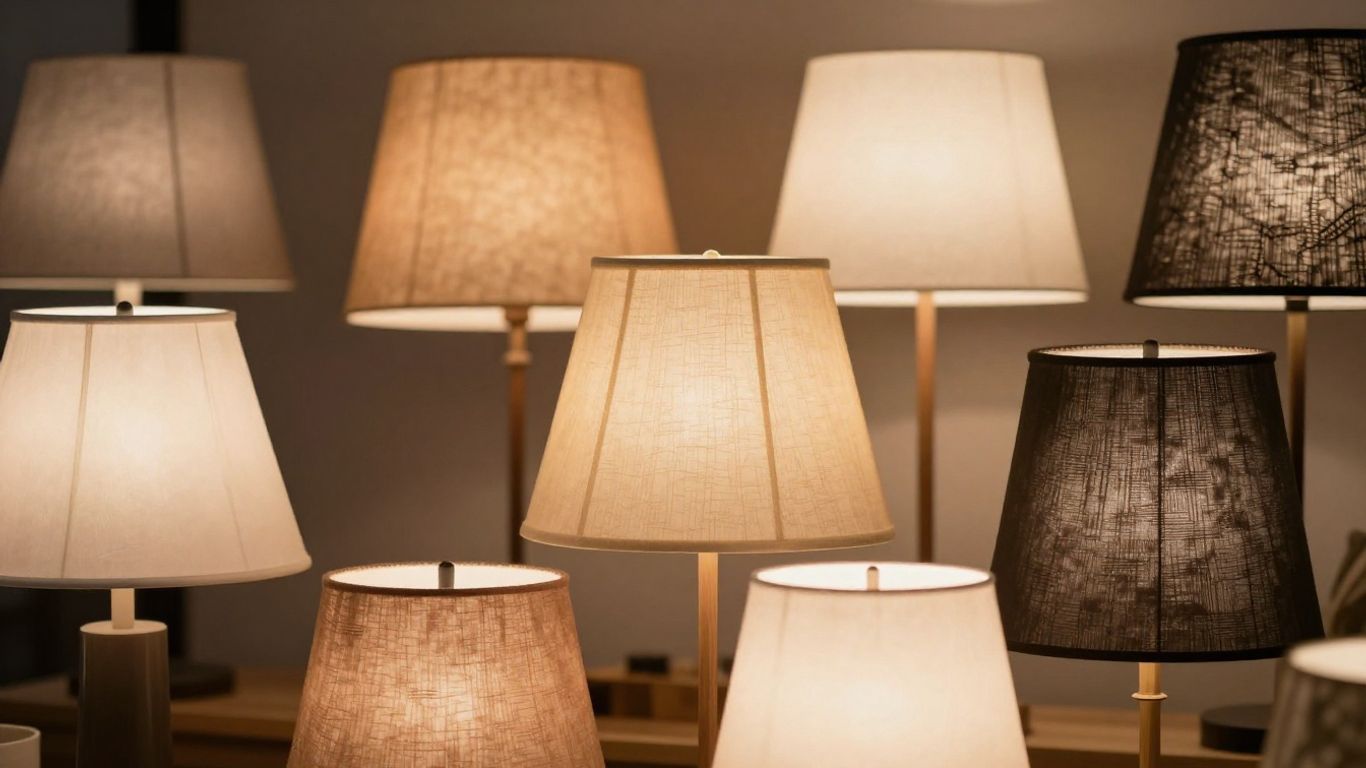
So, you've got a tall lamp, maybe a floor lamp or a substantial table lamp, and you're looking to swap out the shade. It sounds simple enough, right? But then you start looking, and suddenly you're faced with terms like 'spider,' 'uno,' and 'clip-on.' What does it all mean? It's all about the fitter – that's the part of the lampshade that actually attaches to the lamp itself. Getting this wrong is a super common reason why shades get returned, so let's break it down.
The Importance of Fitter Type
Think of the fitter as the handshake between your lampshade and your lamp. If they don't have the right kind of handshake, they just won't connect properly. A shade that doesn't fit correctly won't just look awkward; it might not even stay on the lamp at all. It's the unsung hero of lampshade selection, and honestly, it's often overlooked until it's too late.
Common Fitter Styles Explained
There are a few main types you'll run into:
- Spider Fitter: This is probably the most common one you'll see on table and floor lamps. It has a ring that sits on top of a harp (that U-shaped metal piece that usually comes up from the lamp base). A finial, that decorative knob, screws onto the top to hold the shade in place. If your lamp has a harp, you're almost certainly going to need a spider fitter. You can find more about lamps with harps if you're unsure.
- Uno Fitter: With an uno fitter, the shade attaches directly to the lamp's socket, right below the bulb. There's no harp involved. Sometimes these have a threaded ring that screws onto the socket for a secure fit.
- Clip-On Fitter: These are pretty straightforward. They have little clips that attach directly onto the light bulb itself. You'll usually find these on smaller shades, like for accent lamps or some candelabra-style fixtures, where a harp wouldn't make sense.
Avoiding Common Fitment Mistakes
Honestly, the biggest mistake people make is not looking closely at their actual lamp. Don't just look at the old shade; check the hardware on the lamp. Does it have a harp? If yes, you probably need a spider. Does the shade attach right at the socket? Then it's likely an uno. Is it a tiny shade clipping onto the bulb? You guessed it, clip-on.
Sometimes, the technical details can feel a bit much, but it really boils down to a simple matching game. You're just trying to find the piece that connects correctly. If you're ever in doubt, take a picture of your lamp's socket area before you go shopping or order online. It makes a world of difference.
Understanding these common fitter types is the first step to making sure your new lampshade actually works with your lamp. It saves a lot of hassle later on.
Measuring For The Perfect Lamp Shades For Tall Lamps
Okay, so you've got a tall lamp, and you're ready to give it a fresh look with a new shade. That's great! But before you start clicking 'add to cart,' we need to talk about measurements. Getting the size right is super important, not just for how it looks, but also for how the lamp actually works. It’s not as complicated as it sounds, honestly. A few simple steps will make sure you pick a shade that fits like a glove.
Key Measurements for Round and Square Shades
For most lamps, you'll be dealing with round or square shades. The trick here is to get three main numbers. First, measure the diameter across the top opening, edge to edge, going through the center. This is your top measurement. Then, do the exact same thing for the bottom opening – that's your bottom measurement. Finally, you need the slant height. This is the diagonal distance from the very top edge to the very bottom edge, measured straight down the side of the shade. Don't worry about curves; just a straight line is what you need. It's like measuring the side of a triangle, if that helps picture it.
Measuring Oval and Rectangular Shades
If your shade isn't round or square, you'll need a couple more numbers. For oval shades, measure the longest width across the top opening and then the depth perpendicular to that longest width. Do the same for the bottom opening. So, you'll have a top width, a top depth, a bottom width, and a bottom depth. And just like with round shades, you still need that slant height – measure straight down the side from top to bottom. Rectangular shades are measured the same way: long side and short side for both the top and bottom openings, plus the slant height.
Calculating Shade Dimensions Based on Lamp Height
Now, how do these measurements relate to your lamp? A good starting point is to look at the lamp base itself. Measure the height of the lamp base from the very bottom to where the light bulb socket is. A common guideline is that the shade's height should be about two-thirds of the lamp base height. For the width, a general rule is that the bottom width of the shade should be roughly twice the width of the lamp base at its widest point. For floor lamps specifically, a shade with a base diameter of 45cm (18 inches) or larger often looks best, but always check the proportions against your specific lamp. It's all about making the lamp look balanced, not like it's about to tip over or that the shade is drowning the base.
Remember, these are guidelines, not strict rules. Your eye is the final judge. Does the lamp look stable? Does the shade hide the socket and hardware without looking too long? These visual checks are just as important as the tape measure.
Here's a quick rundown of what to aim for:
- Shade Height: Roughly 2/3 of the lamp base height.
- Shade Bottom Width: About twice the width of the lamp base at its widest point.
- Socket Visibility: The shade should hide the bulb socket and any harp hardware.
- Overall Balance: The lamp should look stable and proportional, not top-heavy or bottom-heavy. Check out some common fitter styles to make sure your shade will even attach correctly.
Choosing The Right Size Lamp Shades For Tall Lamps
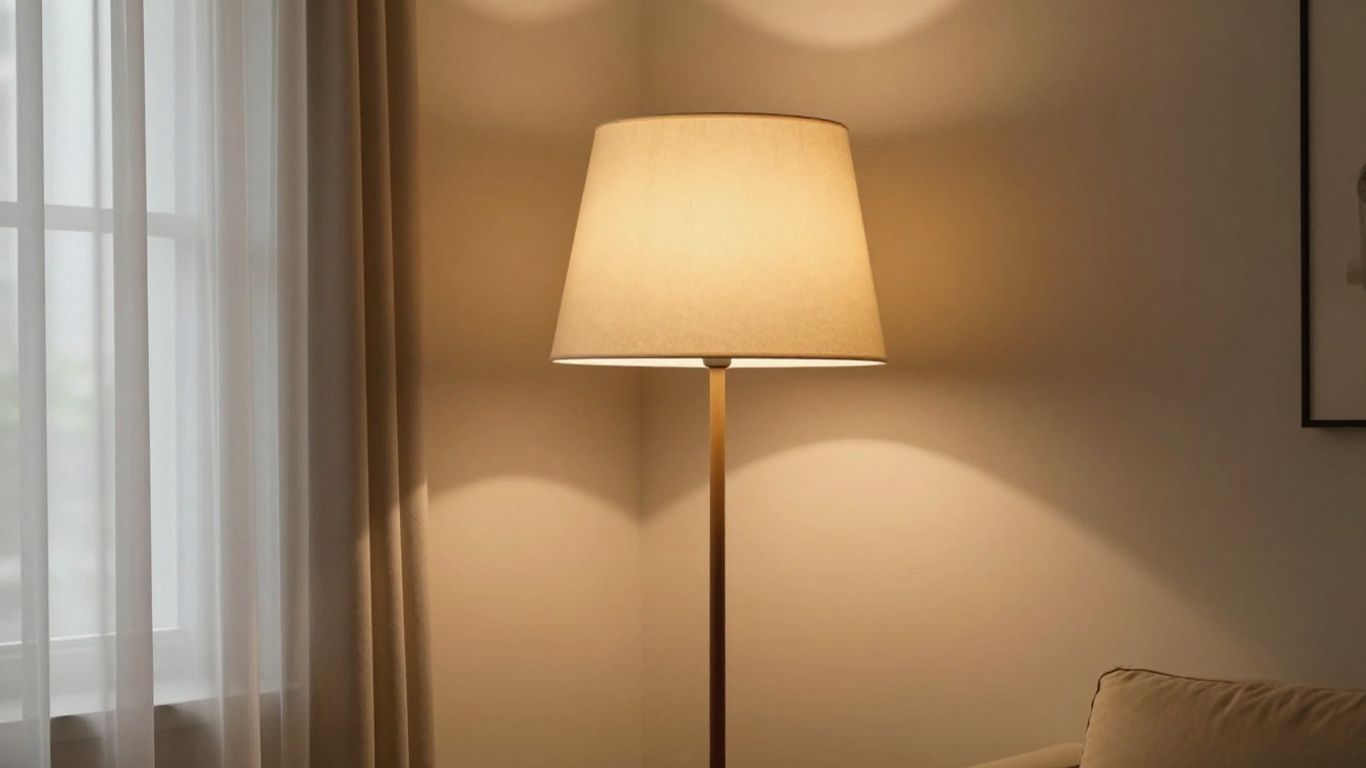
So, you've got a tall lamp, maybe a floor lamp or a substantial table lamp, and you're looking for a new shade. It's not just about picking something that looks pretty; size really does matter. Getting the proportions right can make or break the whole look of your lamp and, honestly, the room. A shade that's too big or too small can make even the most stylish lamp look a bit awkward.
Proportion Guidelines for Lamp Bases
When you're trying to figure out the right size shade, think about the lamp base itself. A good starting point is to consider the height and width of the base. A common guideline that decorators often use is that the shade's height should be about two-thirds the height of the lamp base. For the width, aim for the shade's bottom diameter to be roughly twice the width of the lamp base at its widest point. These aren't hard and fast rules, but they're solid starting points to avoid common mistakes.
Here's a quick rundown of what to look for:
- Shade Height: Aim for roughly 2/3 of the lamp base height.
- Shade Width: Aim for about twice the width of the lamp base.
- Overall Balance: The lamp should feel stable, not top-heavy or bottom-heavy.
Floor Lamp Shade Sizing
Floor lamps, being taller, usually need larger shades than table lamps. For these taller fixtures, a shade with a bottom diameter of around 18 inches is often a good bet. If you want to get a bit more specific, you can take the height of your floor lamp's base (not including the bulb socket or any finials) and divide it by three. That number can give you a good idea of the ideal bottom width for your shade. Remember, the goal is to have the shade look like it belongs, not like an afterthought.
Getting the scale right is key. Think about how the lamp will look in the room. Will the shade overwhelm a small space, or will it get lost in a large one? It's a balancing act.
Ensuring Proper Vertical Shade Placement
Once you've got the size sorted, think about how the shade sits on the lamp. You want the shade to cover the light bulb and any hardware, like the socket or harp, to cut down on glare and make things look neater. When you set the shade on the lamp, stand back and look at it from eye level. The shade should sit centered, hiding most of the internal workings. If a lot of the socket is sticking out below the shade, it might mean the shade is too short, or the fitter mechanism isn't quite right. It's all about that finished, polished look. For a bit more context on how fitters work, you can check out common fitter styles explained.
Selecting Materials and Shapes For Tall Lamp Shades
So, you've got your tall lamp base and you're ready to find the perfect shade. But wait, there's more to consider than just size! The material and shape of your lampshade play a huge role in how the light looks and how the whole lamp fits into your room. It's not just about looks; it's about function too.
Fabric Options and Their Effects
When you think about lampshade materials, fabric is probably the first thing that comes to mind. And for good reason! The fabric choice really changes the vibe. Cotton, for instance, is super common. It gives off a nice, warm light that's good for most rooms. Linen is a bit more textured, giving a relaxed feel, and it diffuses light really well. If you're going for something fancy, silk can add a touch of luxury, but you have to be careful with it – it's delicate and can fade.
- Cotton: Warm, versatile light. Needs dusting. Can discolor.
- Linen: Textured, elegant. Good light diffusion. Can wrinkle.
- Silk: Luxurious glow. Delicate, prone to fading.
- Washi Paper: Soft, minimalist light. Very delicate.
- Parchment: Cozy glow. Needs careful cleaning.
The material of your lampshade isn't just about aesthetics; it directly impacts the quality and direction of light. A thicker fabric will absorb more light, creating a moodier atmosphere, while a thinner material will allow more light to pass through, brightening the space.
Material Choices for Modern and Traditional Styles
What kind of look are you going for? If your lamp has a sleek, modern base, you might want a shade made from something like acrylic or a smooth PVC lining. These materials are durable and clean up easily. For a more traditional lamp, think about shades made with stained glass, like Tiffany styles, or even mica. These add a real decorative touch and can be quite artistic. They often have intricate designs that become a focal point. For a classic look, bell or empire shapes in fabric are usually a safe bet.
| Style | Recommended Materials | Effect on Light |
|---|---|---|
| Modern | Acrylic, PVC, Metal, Frosted Glass | Crisp, clean, or diffused light |
| Traditional | Silk, Cotton, Linen, Stained Glass, Mica, Parchment | Warm, soft, ambient, or decorative light |
| Rustic | Burlap, Linen, Woven materials, Raw wood accents | Earthy, textured, diffused light |
| Industrial | Metal (perforated or mesh), Canvas, Leather accents | Focused, directional, or industrial-chic glow |
How Shade Shape Influences Light Distribution
Don't forget the shape! It matters a lot for how light spreads out. A drum shade, with its straight sides, tends to give off a pretty even light both up and down. An empire shade, which is wider at the bottom, directs more light downwards, which is great if you need focused light for reading. Square or rectangular shades can give a more modern, geometric feel and work well with similar lamp bases. For a softer look, a bell shape or a scalloped edge can add a nice touch. Ultimately, the shape and material work together to create the mood and functionality of your lighting. If you're looking for a shade with a specific shape, like a drum or empire, make sure to check out various lampshade shapes available.
Matching Lamp Shades For Tall Lamps To Room Purpose
So, you've got this great tall lamp, but what kind of shade should go on it? It's not just about looks, you know. The shade really decides where that light goes and how the whole room feels after dark. Think of it like picking out clothes for a specific event – you wouldn't wear a ballgown to the gym, right? Same idea here. The lamp's job in the room should be the first thing you think about.
Shades for Living Room Ambiance
For a living room, you usually want a light that feels welcoming and comfortable. It should be bright enough to chat or help with homework, but not so harsh that it feels like an interrogation room. A drum shade is often a good bet here because it spreads light out pretty evenly. If you have a floor lamp next to your sofa, a drum shade can make that whole seating area feel more connected. For rooms with solid wood furniture or handmade pieces, a shade made of textured linen or something that looks like burlap can add a nice softness without being too fancy. It's all about creating a cozy vibe where people want to hang out. You can find a wide selection of living room lampshades that fit this bill. Find the perfect lampshade
Optimizing Shades for Reading Nooks
If your tall lamp is destined for a cozy reading corner, you need a shade that helps direct light right where you need it – onto your book or magazine. Empire shades, which are narrower at the top and wider at the bottom, are pretty good at sending more light downward. This is super helpful when you're trying to focus on the words. You want a shade that makes reading easy on the eyes, not one that makes you squint. The shape really matters here for making that little spot functional and inviting.
Functional Shades for Home Offices
Home offices are a different story. Here, function usually trumps mood. You need clear, controlled light, especially if you spend long hours at your desk or are on video calls. A hard-backed shade, like a drum or a more structured empire style, can make a desk lamp much more useful. The light feels more directed and less scattered, which can help reduce eye strain. You don't want a shade that creates glare or shadows where you're trying to work. It's about making the space practical and productive.
When picking a shade, ask yourself: What is this lamp for? Is it to make the room feel warm and inviting, to help someone read without straining their eyes, or to provide clear, focused light for work? The answer will guide you to the right shape and material, making your lamp much more effective.
Here's a quick look at how shade shapes can help:
- Drum Shades: Great for general living room light, spreading illumination evenly. They offer a balanced glow.
- Empire Shades: Ideal for reading lamps or bedside tables, directing more light downwards where it's needed.
- Bell Shades: Offer a softer, more decorative look, often suited for traditional spaces or accent lighting.
- Square/Rectangular Shades: Can add a modern, architectural feel, best paired with lamps that have clean lines.
Achieving Balance With Lamp Shades For Tall Lamps
So, you've got a tall lamp, and you're looking for the perfect shade. It's not just about finding something that fits; it's about making the whole thing look right, you know? Like it belongs. A lamp that's too top-heavy or too skinny at the bottom just looks a bit off. We're aiming for that sweet spot where the shade and the base look like they were made for each other.
Visual Harmony Between Shade and Base
Think about the shape of your lamp's base. If it's round, a drum or bell-shaped shade usually works well. If your base has straight sides, like a square or rectangle, a shade with similar lines, maybe a rectangular or empire shape, will probably look best. It’s like matching shoes to an outfit – you want things to flow. The goal is to create a cohesive look where neither the shade nor the base overpowers the other.
The Role of Shade Width and Height
Getting the dimensions right is key. A general rule of thumb for the shade's height is about 50-75% of the lamp base's height. For the width, especially the bottom diameter, aim for it to be roughly two-thirds of the lamp base's height, measured up to where the bulb sits. For floor lamps, which are naturally taller, you might need a shade that's around 18 inches wide, but always check the lamp's height. A good starting point is to divide the lamp base height by three to get a rough idea for the shade width. Remember, these are just starting points; your eye will tell you a lot.
Here’s a quick way to think about it:
- Shade Height: Aim for 50-75% of the lamp base height.
- Shade Bottom Width: Roughly 2/3 of the lamp base height (up to the bulb).
- Floor Lamp Width: Consider around 18 inches, or base height divided by 3.
Ensuring a Finished Lamp Appearance
Finally, consider how the shade sits on the lamp. The shade should hide the socket and any hardware. This is where the fitter type and the 'drop' (how far the fitter extends down) come into play. You don't want to see the bare bulb or the metal bits sticking out. A well-placed shade makes the whole lamp look polished and intentional. It's the final touch that pulls everything together, making your tall lamp a stylish addition to the room, not just a light source. It's about making sure the lamp looks complete, like it's ready for its close-up.
Sometimes, the simplest approach is the best. Don't get too caught up in complicated rules. Look at your lamp, look at the shade, and ask yourself if it feels right. Trust your gut. If it looks balanced and pleasing to you, then you've probably nailed it. The best lamp shade sizes are the ones that make your lamp look its best.
For floor lamps, the shade should generally be about one-third of the lamp's total height. The diameter of the shade should also be proportionate to the base. A wider base might need a wider shade to avoid looking top-heavy. It's all about visual weight and making sure the lamp doesn't look like it's about to tip over, either literally or figuratively. Getting the shade size right is a big part of this.
Wrapping It Up
So, finding the right lamp shade for your tall lamp doesn't have to be a huge headache. It's really about looking at the lamp itself and thinking about how you want the light to feel in your room. Don't forget to measure things up – a shade that's too big or too small just looks off, and nobody wants that. Whether you're going for a cozy vibe in the living room or need clear light for reading, there's a shade out there that will work. And hey, if you get stuck, asking for a little help from a store that knows their stuff can save you a lot of hassle. Happy shade hunting!
Frequently Asked Questions
What's the most important thing to check when buying a new lamp shade?
The most crucial step is to make sure the new shade fits the lamp's hardware, often called the 'fitter.' If the fitter type is wrong, the shade just won't attach properly. Common types include spider, uno, and clip-on. Checking this first can save you a lot of hassle and returns.
How do I know what size lamp shade to get for my tall lamp?
For tall lamps, think about balance. A good rule of thumb is that the shade's height should be about two-thirds the height of the lamp base. Also, the shade's bottom width should be roughly twice the width of the lamp base at its widest point. This helps the lamp look sturdy and not top-heavy.
What's the difference between different shade shapes and how do they affect the light?
Different shapes spread light differently. Drum shades, with straight sides, give off light evenly all around. Empire shades, which are narrower at the top and wider at the bottom, send more light downwards, which is great for reading. Bell shades have a softer, curved look and tend to spread light more gently.
Does the material of the lamp shade really matter?
Yes, the material affects both the look and the light. Fabrics like linen or cotton give a soft, diffused glow, perfect for relaxing rooms. Silk looks more formal. Materials like metal or firm linings create a sharper, more directed light, which works well in modern spaces or for task lighting.
How can I tell if my lamp shade is positioned correctly on the lamp?
When the shade is on the lamp, it should mostly hide the light bulb socket and any hardware connecting the shade to the lamp. Looking at the lamp from eye level, it should appear balanced, not like the shade is too high or too low. The shade should cover the socket to reduce glare.
Can I use different types of lamp shades in one room?
Absolutely! You don't need every lamp shade in a room to be identical. The goal is for them to work together. For example, one lamp might provide a soft, ambient glow for relaxing, while another offers brighter light for reading. Mixing shades can add visual interest and meet different lighting needs.


Leave a comment